
 If you are a gamer like me, I bet you can’t wait for all of the new game releases that are expected this year, like Hitman 3, Far Cry 6, Stray, LEGO Star Wars: The Skywalker Saga and more, so let’s check some of them in further details.
Gotham Knights
After the apparent death of both Batman and the Police Commissioner James Gordon, the open world Gotham City is becoming a major home of crime with ongoing corruption and chaos. While adopting the roles of Batman’s allies – Robin, Batgirl, Nightwing and Red Hood, players must try to save the city from its downfall. With the help of more supportive characters, like Bruce’s butler Alfred, our players are the last hope of saving Gotham City. They will have to battle supervillains like Mr. Freeze and a legion of assassins, led by a secret criminal society – the Court of Owls. The game will be available for PS4, PS5, Xbox One, Xbox Series X, Xbox series S and Microsoft Windows.
Horizon Forbidden West
The sequel to Horizon Zero Dawn from 2017 is expected to be released this year, 2021. The previous game had won multiple awards and it became one of the best-selling PS4 games and therefore its sequel is highly anticipated among all of those who enjoyed playing the first game. Even if you have not played the first one, after watching the trailer you will almost certainly get intrigued. Horizon Forbidden West will be available for both PS4 and PS5. The game trailer reveals stunning nature and the adventure of the huntress Aloy. It is set in the distant future, stretching from Utah to the Pacific coast, where Aloy has to solve mysteries, while dangers are hidden in every corner. She must save the world as the biosphere is in peril, scan and study loads of animal-like machines that are found typically in the wild, but not only, and face new tribes, some of them peaceful, but others hostile.
Kena: Bridge of Spirits
An original idea for a video game, where Kena is the main character that is a spirit guide, helping deceased people move from the physical world to the spirit one. She is possessing magical abilities that are helping her in her tasks. A long time ago, there was a tragedy that struck the main village in the game. The fictional location is not Kena’s birthplace, but throughout the game she is trying to slowly restore the area. Third-person perspective action-adventure game that will be available on Microsoft Windows, PS4 and PS5. The scheduled release is in March 2021.
Resident Evil Village
Following the events of Resident Evil 7: Biohazard, the upcoming survival horror game takes place few years after the previous installment and the main characters Mia and Ethan Winters are settling down in a new place, while trying to forget the past. They’ve had a daughter and are starting their lives anew when a tragedy happens and they get attacked in their home by no other but Chris Redfield. After the horrific attack Ethan must find his kidnapped daughter. Scheduled to be released on May 7, 2021 for Windows, PS4, PS5, Xbox One, Xbox Series X and Xbox Series S.
Vampire: The Masquerade – Bloodlines 2
Taking place in 21st-century Seattle, the sequel to Vampire: The Masquerade – Bloodlines from 2004 is planned to be released in 2021. The player first creates his character and selects his background as a human, before becoming a vampire, which will determine the interaction options later on in the game. He will be revived as a “thinblood”, referring to the character’s weak vampire abilities. Later on, can join one of the five clans, each of them having a different combination of abilities, and he can upgrade his skills. Missions have to be completed, but a player can choose to take side tasks too. While needing blood to survive, the character is also given points on humanity, with the aim of sparing innocent lives. The blood can be obtained from humans, without necessarily taking all of their blood, while it can also be taken from rats and blood bags.
The character will be feeding on and enhancing his senses temporarily, from to the victims’ emotional state. After obtaining the same multiple times, that particular sense will get permanently enhanced. The players must hide the vampire existence from the rest of the world and be mindful in front of witnesses and police, as they can get penalized for exposure and get chased down by the rest of the vampires. Alternating to third-person perspective for some activities, but mainly played in first-person, the game will be available for Microsoft Windows, PS4, PS5, Xbox One, Xbox Series X and Xbox Series S.
 The casino industry and the gaming industry are among the biggest ones in the world, raking in billions upon billions of dollars every single year. Think about it – the combined sum that people spend on videogames and microtransactions in one year is almost as big as the money people spent on books! No, I’m not kidding, in 2016 the gaming industry generated
 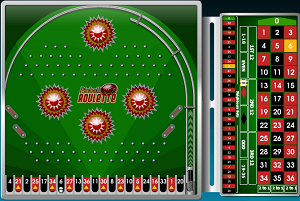 This innovative and unique game variant flips the usual roulette gameplay on its head. The wheel is replaced by a pinball machine in this game variant. Across the bottom of the machine you find the same coloured and numbered pockets that you would usually find on a European Roulette wheel. You place your bets and then launch the ball into the machine.
 This unique variant brings together the classic game of roulette and
 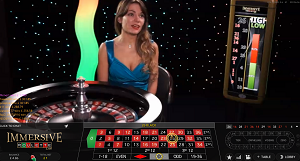 Whilst there is no shortage of live roulette variants available online,
 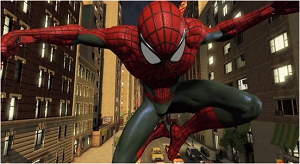 Who has never wished they were Spiderman? Saturday mornings used to be all about your ‘Friendly Neighbourhood Spider-Man’. When the first Spiderman game was released it was terrible! It suffered from poor controls, camera angles that defied logic and bad voice acting from Tobey Maguire. So, when the second instalment was released, I like many others, had very low expectations, but wow!
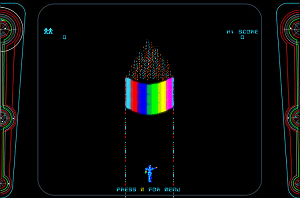 The arcade version of Tron is based on the 1982 science fiction movie starring Jeff Bridges. In the film Kevin Flynn, who is played by Bridges, is transported into a digital world and becomes a freedom fighter. The film was one of the first feature films to really embrace new digital technology.
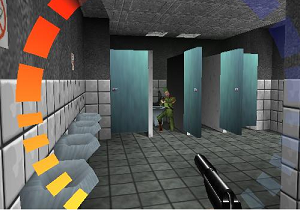 To me, Goldeneye was the turning point in video games. It looked simply stunning. When this game was released for the Nintendo 64, it just blew me away. The game had everything, beautiful graphics, top notch sound and its arrival heralded a new generation of first person shooters.
  Hi there, I’m Jonny, welcome to my new blog. Let me start by telling you a little about myself. I work in advertising, have a dog named Dave and my major passion in life is gaming! My interest in games started as a kid. I have fond memories of navigating through Dizzy’s adventures whilst the green screen of the Amstrad flickered away. When my parents gave my sister and I a Sega Mega Drive for Christmas, I was amazed by the slick graphics and exhilarating playing experience of games like Sonic and Ecco the Dolphin. Now of course, gaming has come a long way since then and nowadays, cutting edge technology is used to provide thoroughly entertaining and immersive game play. What was already good just keeps getting better and better.